
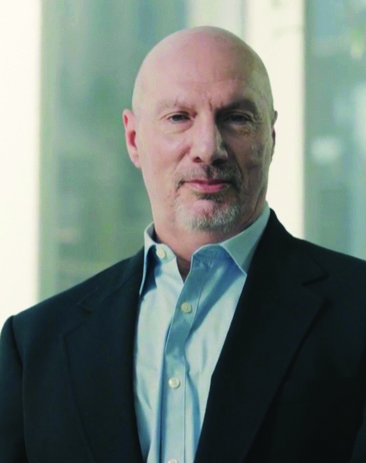

A 62-year-old Ponca City man has not one but two brain surgeries to remove a stubborn brain tumor.
First Surgery
In 2017, Chris Dent was just 55 years old when he started having trouble walking and even speaking. He and his doctor at the time, both thought he may have had a stroke. “My doctor sent me to have an MRI,” Chris remembers. “He called me the next morning at 8 o’clock and said, ‘good news you didn’t have a stroke, bad news you have a golf ball sized brain tumor.’”
Chris was in shock. The thought of having brain surgery terrified him, but so did thinking about what his life could look like if he did nothing. “It was tough. I went from playing volleyball, softball, running and lifting weights all the time, to having difficulty walking around the block.” He opted for the surgery.
The surgeon was able to remove most of the tumor but was unable to remove it all because of the tumor’s complex location and the risk involved when operating in that area of the brain. Chris suffered some lasting side effects to his left ear and eye but was able to return to his active lifestyle which, to him and his dog Roscoe, made it all worthwhile. “You forget how nice it is to take your dog for a walk in the park until you can’t do that anymore,” he proclaims.
Second Surgery
Fast forward five years and Chris started having symptoms again. “I didn’t want to go through all that again, so I kept putting off treatment until my face went numb and I started to lose my balance.”
When he couldn’t ignore it anymore, he went to see Stephen Ross, M.D., at INTEGRIS Health Medical Group Ponca City. “When Chris came to see me and he established care, the dizziness was his major symptom, his major concern. Previously having the tumor that he had, dizziness was a major red flag for him.”
Ross referred Chris to Adedamola Adepoju, M.D., a neurosurgeon with INTEGRIS Health Medical Group Spine and Neurological Surgery at INTEGRIS Health Baptist Medical Center in Oklahoma City. He confirmed that the tumor had grown back. “The issue is sometimes these slow growing tumors can grow so large that they start causing problems,” explains Adepoju. “In Chris’ case, the tumor was about 3.5 to 4 centimeters, which was quite large and was also pressing on the brain stem.”
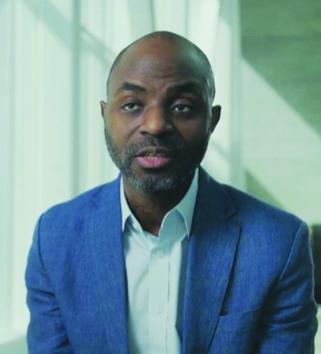
Adepoju recommended a second brain surgery. “The ultimate goal is to remove the tumor completely because if it was not removed completely, then he was going to need treatment like radiation, which also has its own damaging effects.”
The complicated surgery took 12 hours but in the end was remarkably successful. “The tumor was completely removed and we were able to save the facial nerve,” Adepoju declares. “Chris will not need follow up radiation.”
Victory Lap
Chris is back up and around, taking Roscoe on two to three mile walks every day. He is thankful for Dr. Adepoju who he calls ‘the nicest person in the world’ and is grateful to have his condition finally fixed once and for all.