

Nurses are trained to care for others during some of the most difficult moments imaginable.
But when a patient, visitor or situation suddenly becomes dangerous, one question remains: How quickly can a nurse get help?
Hospitals have spent years investing in workplace violence prevention. Nurses receive de-escalation training. Hospitals add security measures. Healthcare organizations create policies designed to protect employees and respond when situations escalate.
But prevention is only one part of the equation.
The reality is that healthcare workers face one of the highest risks of workplace violence across all industries.
The U.S. Bureau of Labor Statistics reports that health care workers are five times more likely to sustain a workplace violence injury than workers in other professions.
That risk is reflected in what nurses are experiencing every day.
A June 2026 survey from National Nurses United (NNU) found that 84.8% of nurses experienced at least one type of workplace violence during the previous year. Another 36.4% said workplace violence had increased on their unit, while only 35.5% reported that staff were available at all times to respond to violence incidents.
The impact extends beyond the moment of an incident. NNU found that 23.4% of nurses surveyed experienced a physical injury or other physical symptoms related to workplace violence incidents. More than 6 in 10 reported anxiety, fear or increased vigilance because of workplace violence, and 25.5% said they had considered leaving the profession because of it.
That makes preventing violence critically important. But it also raises another question: What happens when prevention is no longer enough and a healthcare worker needs help right now?
Prevention Matters, But So Does Emergency Response
Training, staffing, security teams and de-escalation procedures all play an important role in protecting healthcare professionals.
But even the strongest prevention strategies cannot predict every situation.
A nurse may be alone in a room as an agitated patient becomes increasingly aggressive. A technician may slip and fall in a hospital parking lot when no one else is nearby. A home health nurse may enter an unfamiliar home alone to provide care.
The situations are different, but the challenge is the same: when something goes wrong, the worker needs a way to call for help quickly from wherever they are.
In those moments, response time becomes critical.
Traditional emergency systems are often built around a location: a nurses’ station, security office or wall-mounted alert button.
But healthcare workers don’t stay in one place.
They move between patient rooms. They provide care in unpredictable environments. They may find themselves in situations where reaching a traditional emergency system isn’t possible.
How Wearable Panic Buttons Support Healthcare Workers
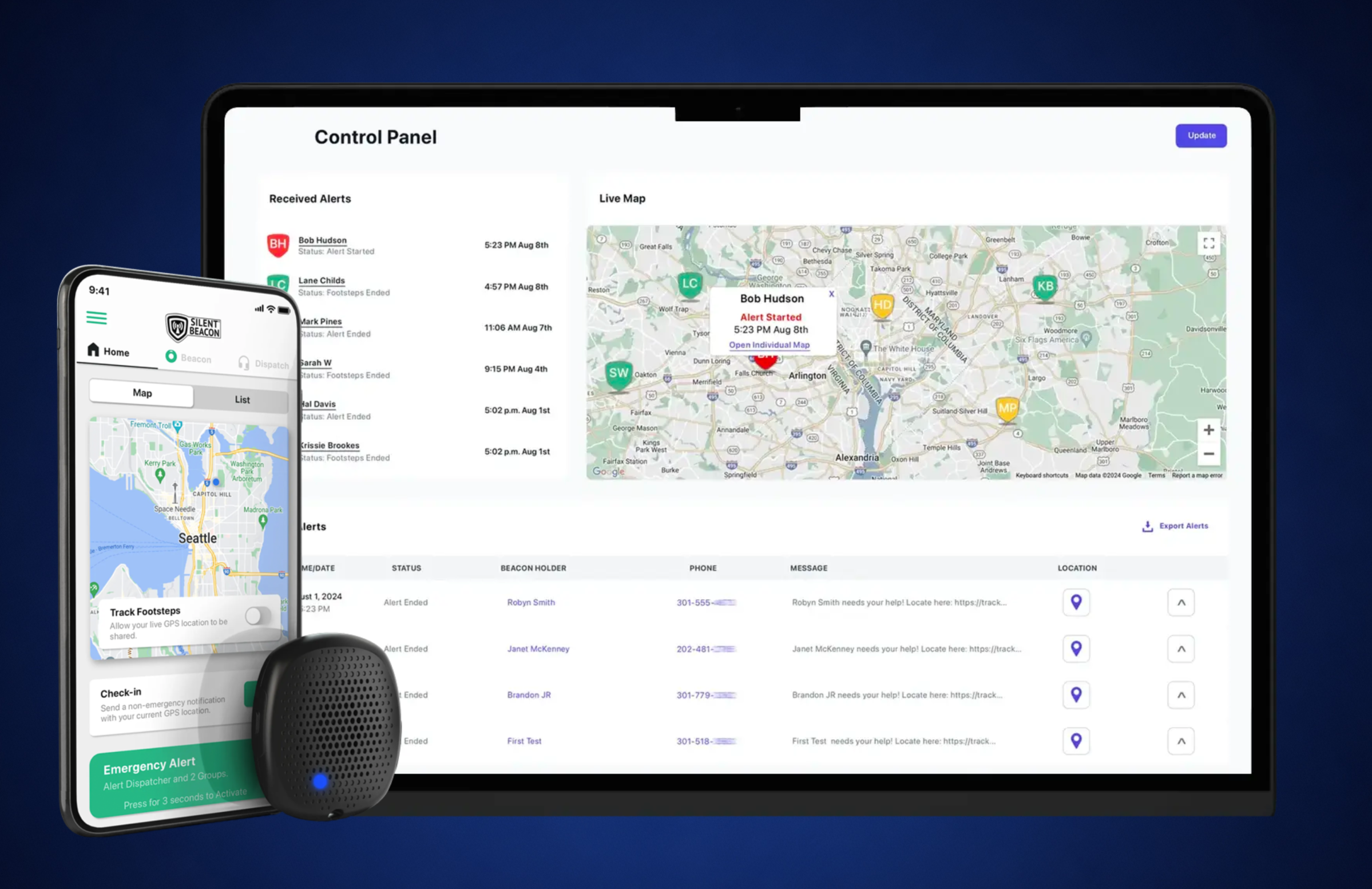
Silent Beacon’s wearable panic button is designed to help close that gap by giving healthcare workers a simple, discreet way to request assistance directly from wherever they are.
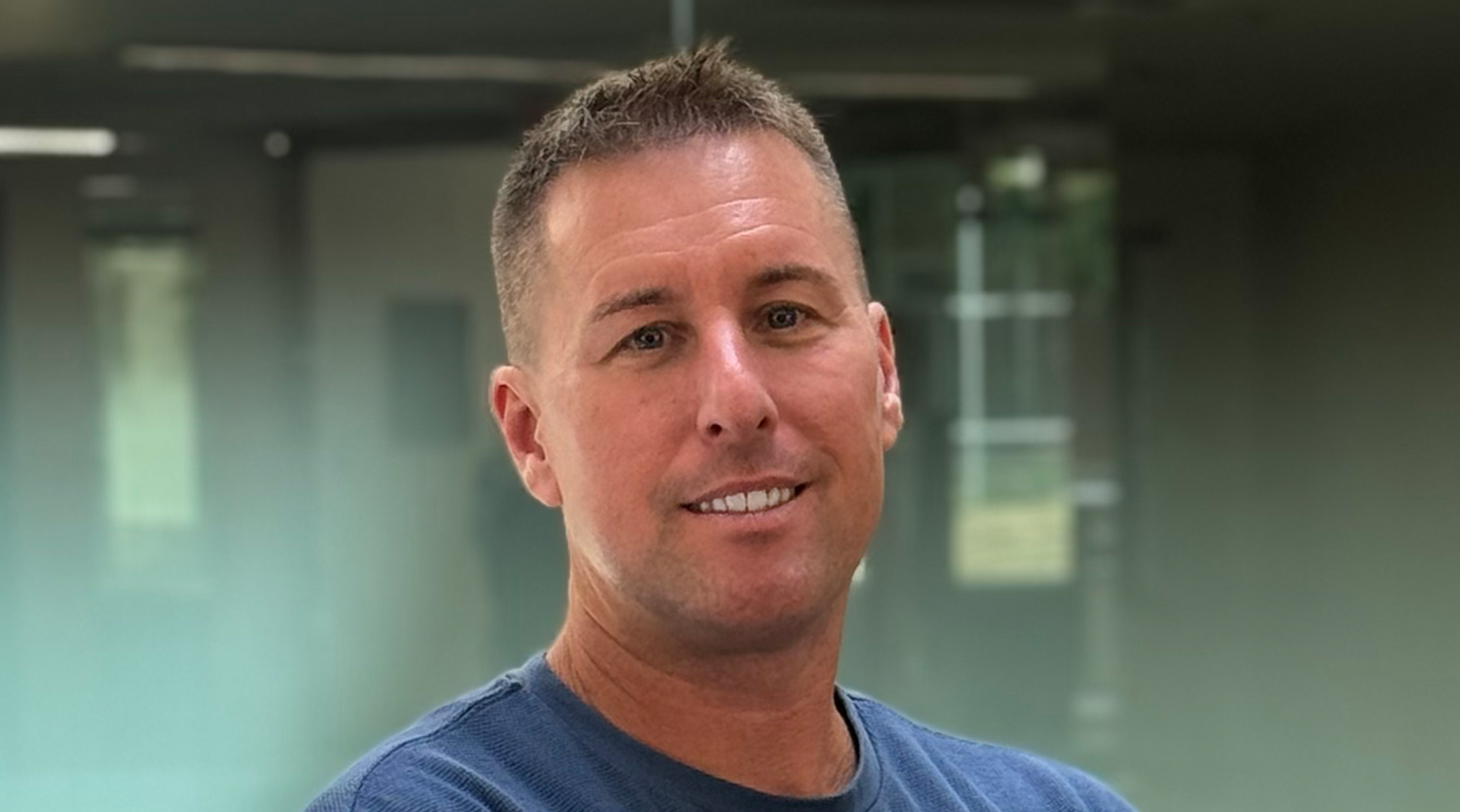
“Nurses and healthcare workers are on the frontlines every day,” said Kenny Kelley, founder and CEO of Silent Beacon. “They care for people during some of the most vulnerable moments of their lives, often while navigating unpredictable and challenging situations.”
“The reality is that many healthcare workers are not standing next to a phone, a security desk or a wall-mounted emergency button when something goes wrong,” Kelley said. “That’s the gap I created Silent Beacon to address: giving workers a simple, discreet way to call for help that goes with them wherever they are.”
In an emergency, simply being able to call for help is only part of the problem. Responders also need to know where the worker is, particularly when that person could be moving between patient rooms, working in a parking lot or providing care in a patient’s home. When activated, Silent Beacon can call 911, alert designated emergency contacts and share the user’s live GPS location.
Discretion can be just as important. If a patient or visitor is becoming aggressive, visibly reaching for a phone or moving toward a wall-mounted panic button can signal that the worker is calling for help and potentially escalate the situation. Silent Beacon’s Silent Mode allows a nurse or healthcare professional to send an alert without drawing attention to what they are doing.
The device also supports two-way communication, giving responders a way to communicate with the worker during the emergency. That can help provide additional context about what is happening while assistance is on the way, without requiring the worker to unlock a phone and place a call.
For healthcare workers, those capabilities can be especially important when no one else is nearby.
“When a healthcare worker realizes they’re in danger, that’s not the moment they should have to figure out how to call for help without making the situation worse,” Kelley said. “They should be able to get help right then, from wherever they are. That’s what wearable safety tech is really about: closing the distance between the moment someone needs help and the moment that help reaches them.”
Healthcare Workers Face Safety Risks Across Care Settings
Healthcare safety challenges extend beyond far beyond hospital walls.
Kara Smith, LCMFT, practice owner of Maryland Marriage & Family Therapy Centers, has spent more than 20 years working in mental health settings, including homeless shelters, substance abuse programs and private practice.

Earlier in her career, she often worked alone with clients who were in crisis or behaving unpredictably. At times, that meant entering people’s homes without knowing what she would encounter.
“I remember standing outside a residence thinking, ‘I have no idea what I am about to walk into, and if something goes wrong, how will anyone know I need help?’” Smith said. “I have also had to call 911 while working. Those experiences stay with you. They make you realize how quickly a helping professional can become the person who needs help.”
That experience shaped how Smith approached safety when she later opened her own practice.
“When I opened Maryland Marriage & Family Therapy Centers, I knew I did not want safety to be an afterthought,” Smith said. “I had spent years working in settings where I sometimes felt vulnerable and had no discreet, reliable way to call for help. I did not want the therapists on my team to have that same experience.”
Smith began using Silent Beacon’s wearable panic button herself and then equipped her staff with the devices.
“In an escalating situation, unlocking a phone, dialing 911 and explaining where you are may not be realistic,” Smith said. “It may also draw attention to what you are doing and make the situation worse.”
For Smith, the decision was also about moving beyond the kinds of precautions therapists have historically been expected to rely on.
“For years, one of the only safety instructions I received was to place my chair closer to the door so I could escape if necessary,” Smith said. “That is not enough. A chair near the door is not a safety plan.”
Thankfully, no one in Smith’s practice has had to activate Silent Beacon during an emergency. But she said having the devices has fundamentally changed how her team thinks about workplace safety.
“We are no longer relying on someone being able to reach a door, find a phone or explain what is happening in the middle of a crisis,” Smith said. “My team has a fast, direct way to call for help the moment they need it.”
For Smith, that confidence is part of the point.
“That sense of protection matters,” she said. “It is a simple, affordable step that gives workers the confidence that they will not be left alone if a situation turns dangerous.”
Closing the Gap Between an Emergency and Rapid Response
For healthcare leaders, improving workplace safety is not about choosing one solution over another. Training, prevention, staffing and security all matter. But every safety plan should also answer one basic question: What happens the moment a worker realizes they need help?
Healthcare organizations should consider:
- Can employees quickly alert someone if they cannot reach a phone?
- Will responders know where the employee is located?
- Does the safety plan account for workers outside traditional security areas?
- Do employees have a way to request help discreetly if a situation escalates?
“No piece of technology can replace the people, training and systems that make healthcare settings safer,” Kelley said. “But we also have to recognize that even the best-trained professionals can find themselves in situations they can’t control.”
Wearable panic buttons are one way hospitals and healthcare organizations can strengthen that final link in the safety plan: giving workers a direct way to initiate an emergency response when prevention and de-escalation are no longer enough.