

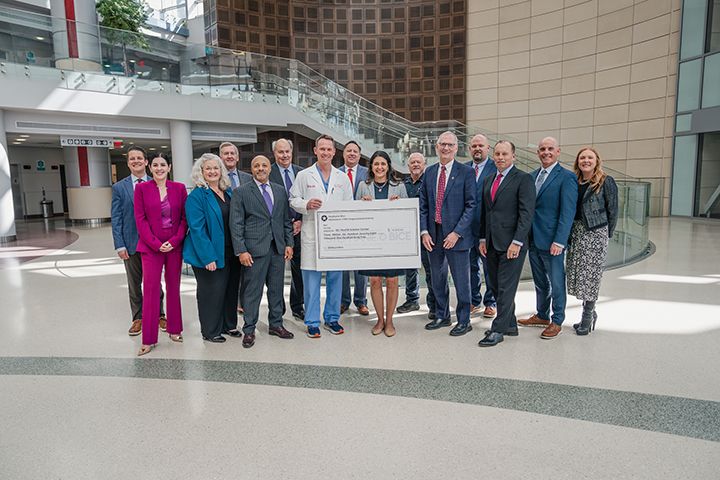

Congresswoman Stephanie Bice, who represents Oklahoma’s 5th Congressional District in the U.S. House of Representatives, visited Oklahoma Children’s OU Health to receive an update on major security initiatives underway at the hospital and a briefing on OKNeuroNet, a telemedicine program that connects rural Oklahomans with academic neurologists. Her visit reflects growing federal attention to strengthening health system safety and expanding access to complex care in rural hospitals. Bice recently secured nearly $5 million in federal funding to support these security enhancements and the continued expansion of OKNeuroNet across Oklahoma’s academic health system.
OU Health Leaders Emphasize Urgency of Protecting Healthcare Workers
“Healthcare workers save lives every day. Ensuring their safety is not merely a workplace issue — it is a public health imperative and a moral obligation,” said Richard P. Lofgren, M.D., MPH, president and CEO of OU Health. “We commend Congresswoman Bice for her continued engagement on this critical matter and call on federal, state, and institutional leaders to invest in the people who make our healthcare system possible.”
OU Health’s security enhancements include increased on‑site security presence, upgraded infrastructure, and strengthened coordination with the University of Oklahoma Police Department. These efforts come as hospitals nationwide face a sharp rise in violence against healthcare workers, a trend that threatens both workforce safety and the quality of patient care.
Addressing the Neurologist Shortage Through Telemedicine
The visit also highlighted OKNeuroNet, a telemedicine network designed to address the growing shortage of neurologists across the state. Demand for neurological care continues to rise, yet many rural communities face long wait times, long travel distances, or no access to subspecialty care.
“Neurological care is in higher demand than ever, yet many communities, especially in rural Oklahoma, simply don’t have enough specialists to meet that need,” said Ian Dunn, M.D., FACS, FAANS, chief physician executive and executive dean of the University of Oklahoma College of Medicine. “OKNeuroNet is helping us bridge that gap by giving local hospitals immediate access to academic neurologists through telemedicine. It means patients with complex conditions can be evaluated quickly and accurately, no matter where they live.”
OKNeuroNet allows academic neurologists to evaluate conditions such as stroke, epilepsy, movement disorders and neuromuscular diseases in real time. The program expands capacity, reduces delays in diagnosis and treatment, and strengthens rural hospitals by providing expertise that would otherwise be out of reach.
As Oklahoma’s flagship academic health system, OU Health remains committed to advancing research, training the next generation of healthcare professionals and delivering the highest level of care to every community we serve. Investments in safety and innovative programs like OKNeuroNet strengthen that mission by ensuring our clinicians, learners and researchers can continue driving medical discovery while expanding access to specialized care across the state.